
Measure Overview
Use in CMS Programs
- Finalized through rulemaking for inclusion in the Merit-based Incentive Payment System (MIPS) in 2016.
- Implemented in MIPS starting with Performance Year (PY) 2017.
Description
Percentage of all patients of childbearing potential (12 years and older) diagnosed with epilepsy who were counseled at least once a year about how epilepsy and its treatment may affect contraception and pregnancy.
Measure Specification
Female patients or caregivers counseled at least once a year about how epilepsy and its treatment may affect contraception and pregnancy.
N/A
N/A
All females, including all individuals of childbearing potential (12 years and older) with a diagnosis of epilepsy.
Female Patients Unable to Bear Children.
N/A
Measure Information
Endorsement History
- Initially endorsed, 2013.
- Measure retired and endorsement removed, Neurology Project, 2015-2016.
Link to Endorsement Measure Record: Counseling for Women of Childbearing Potential with Epilepsy
Measure Performance in Program
Measure Score by Performance Year
Impact Summary: This measure supports the Merit-based Incentive Payment System (MIPS) goals of improving the quality and safety of care for patients and promoting higher‑value care by ensuring that patients with epilepsy who are of childbearing potential receive counseling about how epilepsy and its treatment may affect contraception and pregnancy, supporting informed care decisions and reducing avoidable risks to patients and infants.
Clinician performance increased substantially from 2021 to 2022 and remained consistent from 2022 to 2024 but indicated room for improvement for lower-performing clinicians across all years. The analysis identified that a counseling rate of 100% is achievable. Based on the PY 2024 data, a gap in care of roughly 15% was seen when assessing for the required quality action of counseling. While performance for this measure in MIPS continues to be high, there continue to be instances of poor performance as seen within Deciles 1 - 3: 4.35 - 75.
For this measure, Battelle reviewed the following publicly available datasets at Benchmarks - QPP:
- 2026 MIPS Quality Benchmarks.csv (referred to as year 2024 in this assessment)
- 2025 MIPS Quality Benchmarks.csv (referred to as year 2023 in this assessment)
- 2024 MIPS Quality Benchmarks.csv (referred to as year 2022 in this assessment)
- 2023 MIPS Quality Benchmarks.csv (referred to as year 2021 in this assessment)
Battelle analyzed benchmark values for “Measure_ID”=268.
About Figure 1: Figure 1 is a boxplot that shows how rates have changed based on the most recent four years of data available. For each year, the boxplot displays a box with lines and dots to help visualize the range and distribution of rates. The dots represent the minimum and maximum rates, and the line connecting them shows the range of the rates. The box itself covers the middle 60% of the rates, from the 20th to the 80th percentile. A “+” sign shows the average rate. This type of graph makes overall trends in rates over time as well as the consistency and spread of the results easier to visualize.
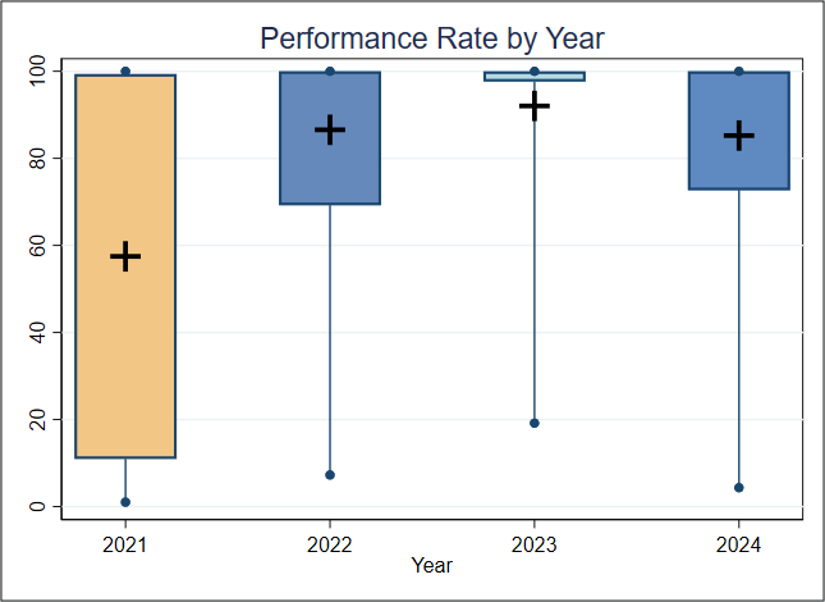
Figure 1. Boxplot of Performance Rate by Year
Figure 1 Interpretation: The mean rate increased substantially from 57.48% in 2021 to 86.56% in 2022 and has remained about 85%-90% since 2022. For this measure, a higher rate indicates a better quality of care.
Score Distribution for Most Recent Years
About Table 1: Table 1 illustrates the distribution of performance rates across deciles for the most recent year with data available.
Table 1. Importance (Decile by Performance Rate, 2024)
Mean | Decile 1 | Decile 2 | Decile 3 | Decile 4 | Decile 5 | Decile 6 | Decile 7 | Decile 8 | Decile 9 | Decile 10 | |
Rate | 85.2 | 4.4-27.7 | 27.7-72.7 | 71.7-97.7 | 97.7-100 | 100 | 100 | 100 | 100 | 100 | 100 |
Table 1 Interpretation: More than 10% of the clinicians have a performance rate less than 30%, and more than 60% of the clinicians have a rate of 100%. If the average performance of Decile 8 (100%) is considered a plausible, achievable rate, and the clinicians in Deciles 1 through 4 improved to reach that rate, the estimated percentage of patients who receive appropriate counseling would go up by nearly 15% (from 85.2% to 100%), potentially leading to better health outcomes. While performance for this measure in MIPS continues to be high, there continue to be instances of poor performance as seen within Deciles 1-3: 4.35 - 75.
Meaningfulness
Importance
The Meaningfulness criterion will be evaluated as part of the full Preliminary Assessment available in September.
Data Stream Burden Reduction
Data Stream Burden Reduction
This criterion will be evaluated as part of the full Preliminary Assessment available in September.
Alignment with the Patient Health Care Journey
Alignment with the Patient Health Care Journey
This criterion will be evaluated as part of the full Preliminary Assessment available in September.
Public Comment
Enter a comment below